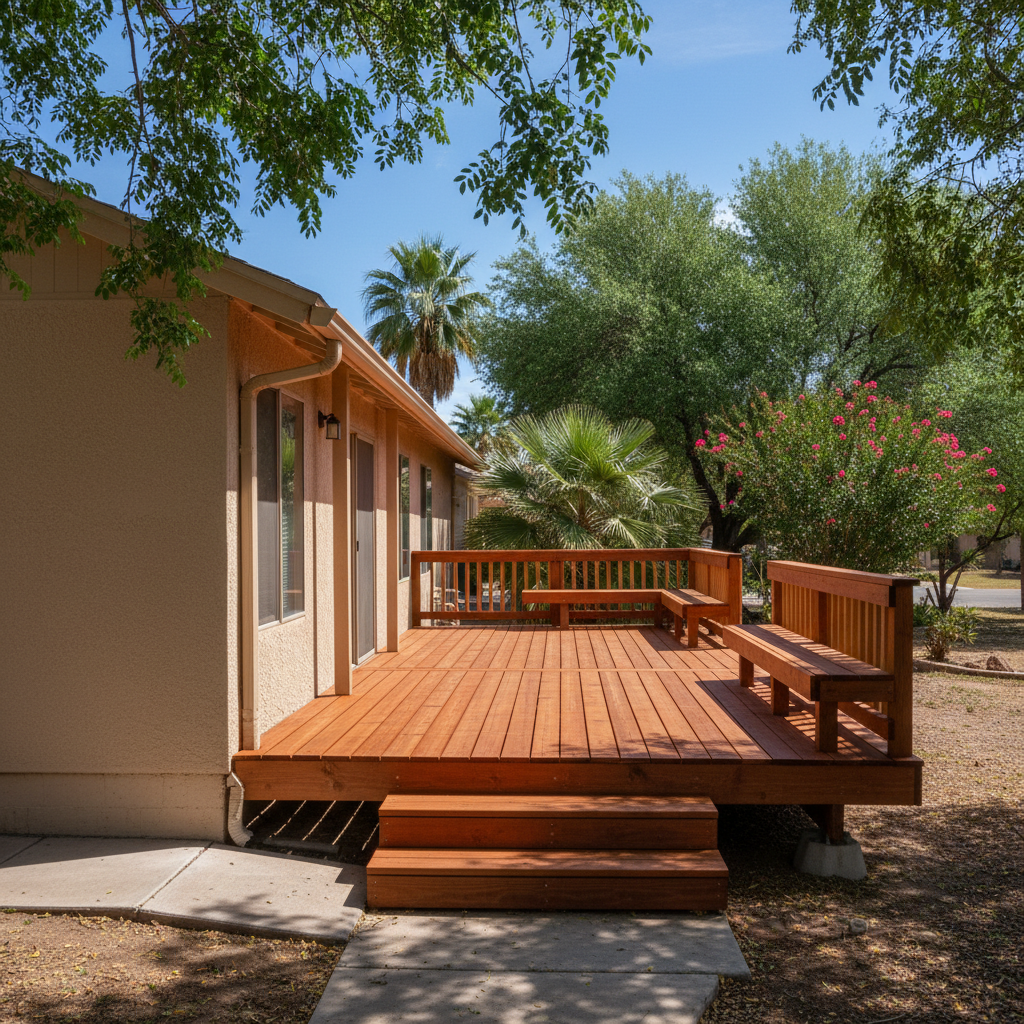
You want your deck to look good, right? Of course you do. But when it comes to painting or staining that deck, I see a lot of folks in Peoria make some pretty common, and often expensive, mistakes. It's not just about picking a color; there's a whole process to getting it right. If you cut corners, you'll regret it faster than you can say 'faded and peeling.' Let's talk about what to watch out for.
Mistake #1: Skipping the Prep Work (or Doing it Wrong)
This is probably the biggest one, and it's where most DIYers—and even some so-called 'pros'—fall short. You simply can't slap new paint or stain over old, dirty, or damaged wood. It won't stick. It'll peel. It'll look terrible in six months, especially with our intense Arizona sun beating down on it. Your deck needs a thorough cleaning, sometimes even a good stripping, to get rid of old finishes, dirt, mildew, and grime. After that, you need to sand it down. I'm not talking about a quick once-over, but proper sanding to create a smooth, porous surface that's actually ready to absorb the new finish. If you skip this, or if your contractor tries to, that's a massive red flag. I've seen decks in the Fletcher Heights area that look great for a month, then the finish just starts flaking off because the prep was rushed.
Mistake #2: Choosing the Wrong Product for Our Climate
Not all stains and paints are created equal, especially when you live in a place like Peoria. We deal with extreme heat, intense UV radiation, and dust storms. A product that works great in a milder climate might fail miserably here. You need something specifically designed to hold up against these conditions. Look for stains with good UV protection and paints flexible enough to handle the wood's expansion and contraction during our temperature swings. Oil-based versus water-based, solid versus semi-transparent – each has its own ups and downs. Don't just grab the cheapest can at the hardware store. Do your homework, or better yet, ask a local pro who deals with these conditions every single day. Using the wrong product means your deck will fade, crack, or peel too soon, and you'll be redoing it sooner than you think.
Mistake #3: Not Understanding the Difference Between Paint and Stain
This might sound basic, but it's a common point of confusion. Paint forms an opaque film on top of the wood, completely covering the grain. Stain, on the other hand, soaks into the wood fibers. Transparent and semi-transparent stains let that beautiful wood grain show through, while solid stains offer more color but still allow some of the wood's texture to be visible. Once you paint a deck, it's a much bigger job to go back to a transparent stain because you have to strip all that paint off. Stains tend to wear more gracefully than paint, often fading rather than peeling, which makes touch-ups easier. So, think about the look you want and the maintenance you're willing to do. If you love the natural look of wood, paint isn't for you. If you want a bold color and don't mind more intensive prep for future recoats, paint might be an option. Just know what you're getting into, okay?
Mistake #4: Hiring the Cheapest Bid Without Vetting
I get it, everyone wants a good deal. But when it comes to something as important as your deck, the cheapest bid is often the most expensive in the long run. A low price often means corners are being cut – usually in the prep work, the quality of materials, or the crew's experience. Ask for references, check reviews, and make sure they're licensed and insured. A reputable contractor, like us at Peoria Deck Solutions, will give you a detailed estimate that spells out the prep work, the specific products they'll use, and a timeline. If someone gives you a super lowball price and can start tomorrow, be wary. You're likely going to end up with a shoddy job that needs to be redone in a year or two, costing you more money and frustration than if you'd just hired a quality contractor from the start.
Mistake #5: Ignoring the Weather Forecast
This one seems obvious, but you'd be surprised. Applying stain or paint when it's too hot, too cold, too humid, or when rain is on the way is a recipe for disaster. Our mornings can be cool, but by afternoon, the deck surface can be scorching. Extreme temperatures can affect how the product cures, leading to bubbling, poor adhesion, or an uneven finish. Always check the manufacturer's recommendations for temperature and humidity ranges. And don't forget about the wind – you definitely don't want dust and debris blowing onto your freshly applied finish. Plan your project for ideal conditions, and if you're hiring someone, make sure they're paying attention to the forecast too. A good contractor will reschedule if the weather isn't cooperating; a bad one will just push through and leave you with a compromised finish.
Getting your deck painted or stained right the first time saves you a ton of headaches and money down the road. Don't rush it, don't skimp on quality, and don't be afraid to ask questions. Your deck is an investment; treat it like one.